
Fermented Foods are a part of culture not only to preserve food but, provide health benefits. Today, I like to teach you how to make my Easy Sauerkraut in a Jar Recipe.
Easy Sauerkraut in a Jar Recipe Video
Benefits of Fermented Foods

Fermentation is a process where yeast and bacteria turn the carbohydrates to acid or alcohol. The acid in cabbage will turn into an acid such as kraut.
Fermenting foods is a wonderful way to incorporate Probiotics into your diet and maintain a healthy gut flora. There are many benefits of Probiotics such as oral health, detoxification, cancer protection, regulate metabolism, helps immune and inflammation!
Many believe that eating fermented foods it will help to relive heartburn. Heartburn is caused by stomach acid during digestion and pushes back into the esophagus. The stomach acid burns the esophageal lining because there is no mucus layer.
Eating fermented foods have beneficial acid but, loaded with good bacteria that will help digestion and move bad bacteria down and out.
There are lots of foods that are rich in Probiotics such as yogurt, sauerkraut, olives, kombucha, buttermilk, sourdough but, did you know raw pickles are filled with good Probiotics.
When fermenting your brine for sauerkraut that you create using water, salt, vinegar and spices are is strong enough to kill bacteria and prevent spoiling.
Finally, did you know eating and drinking fermented foods on a regular bases promote a healthy immune system and healthy weight.
Tips on Easy Sauerkraut in a Jar

Tip number one when making Easy Sauerkraut in a Jar it to use a glass jar such as a mason jar.
Make sure you glass container is rinse properly and no detergent residue because that can encourage black mold and stunt bacteria growth.
Use the highest quality salt you can afford for make sauerkraut.
Do not add to much salt; most people add a lot a first and regret it later! Start with with a half tablespoon of salt and add other half slowly as you taste test it.
Mold may occur during the fermentation that is ok; as long as it is not black. If you see blue or white mold on top of your sauerkraut scrap off and add more brine.
Use filtered water because chlorine and kill good bacteria. If you do not have access to filtered water, boil water for five minute to remove chlorine. Let boiled water color to room temperature before using in the easy sauerkraut in a jar recipe.
Fermentation of sauerkraut can take anywhere from three to five weeks. Longer that five days is fine just taste test to she if sour enough and make sure your brine is completely covering your cabbage through the process.
Making your own sauerkraut is cheaper and will not have preservatives such as sodium benzoate and sodium bisulfite. Also, most store bought sauerkraut is processed over high temperatures and kills all good bacteria needed.
All kruats gets better with age. If you do not like your sauerkraut after a week let it ferment longer.
Tools Needed to Make Easy Sauerkraut in a Jar Recipe

Wide Mouth half gallon or several quart mason jars
Glass Mixing Bowl
Fermenting Weights
Tea Towel or Fermentation Cover
Easy Sauerkraut in a Jar Recipe Directions
Ingredients
- A head of organic red or green cabbage
- 1 tablespoon of quality sea salt

Directions
First cut you cabbage into quarters and cut the core out of the base of the cabbage. Save an outer cabbage leaf for later. The core you can compose or feed to livestock.
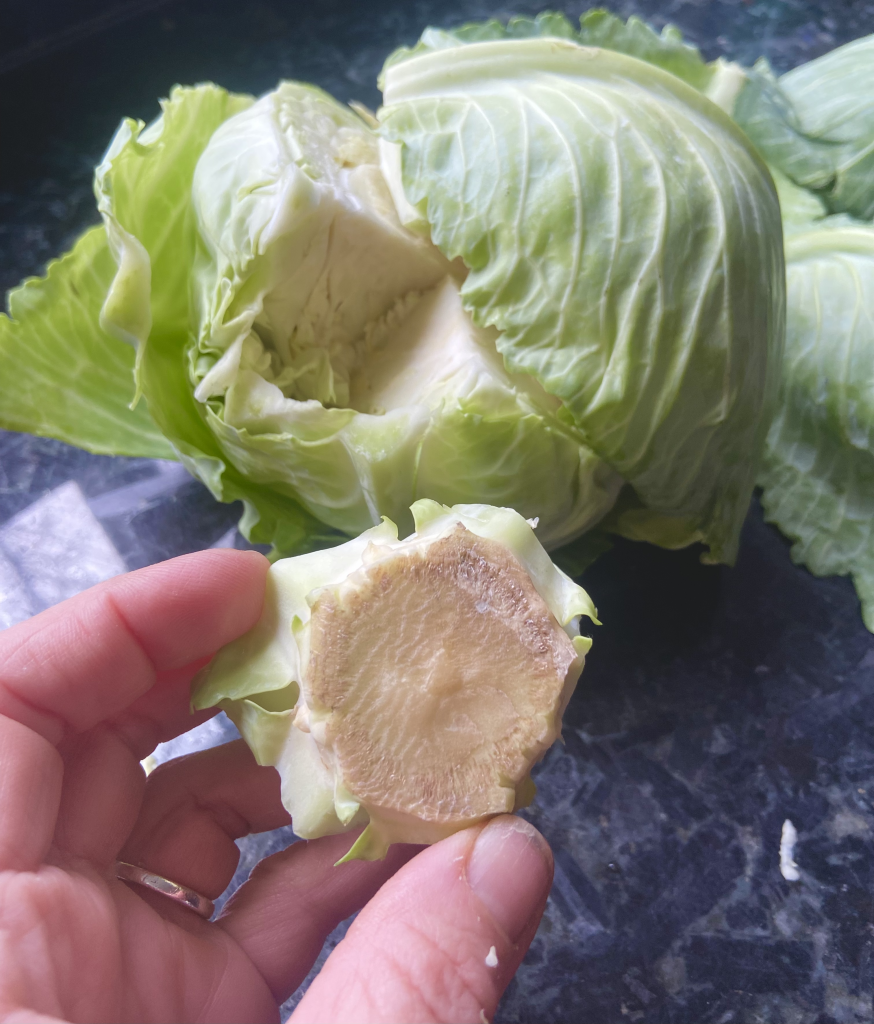
Second, chop you cabbage into strips about one fourth wide. You can use a food processor or grater if you like to shred.

Third, take your chopped cabbage and place in a glass bowl. Never use plastic or metal to prepare fermented food because it could kill the good bacteria.
Fourth, add your half tablespoon of sea salt to cabbage. Use clean hands and massage the salt into your cabbage. You will start to see and feel liquid forming this is your brine.
Five minutes into massage add the rest of you salt if you desire. You may want to taste test before adding last bit of salt. If you like taste omit or simply add sea salt to taste.
Fifth, start squeezing your cabbage to remove the brine and add to mason jar. Compact your cabbage into the jar leave very little space.
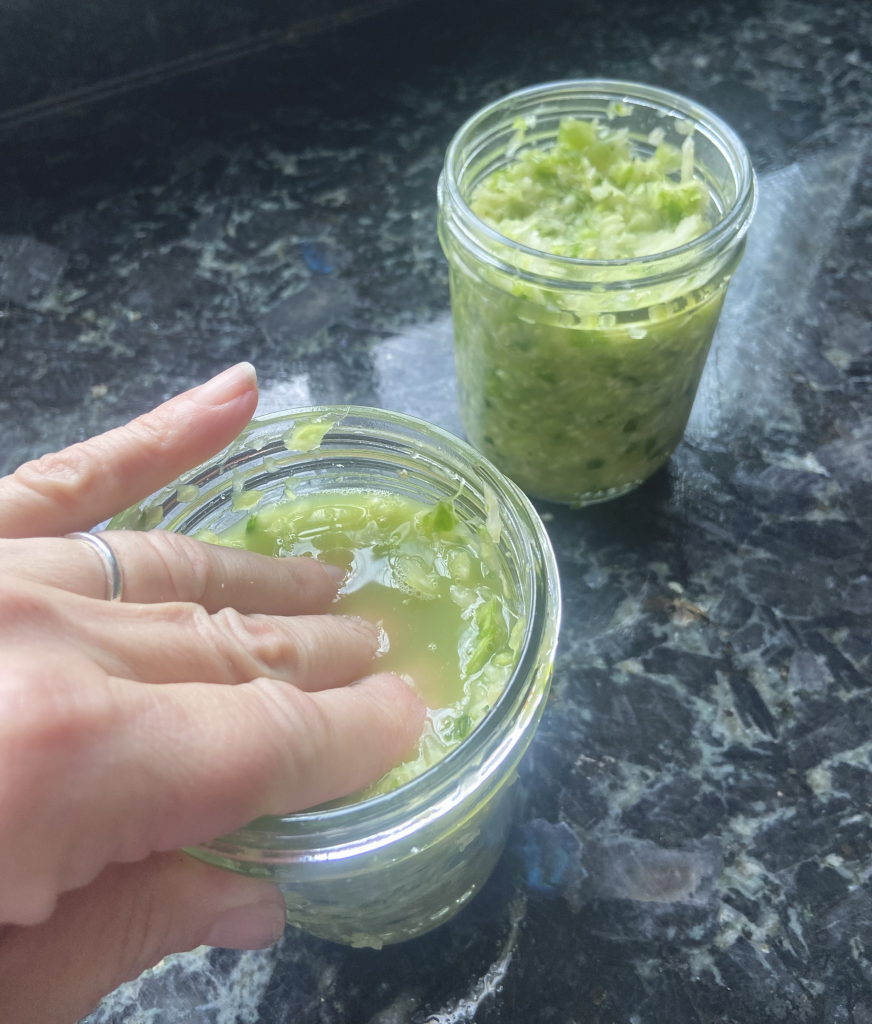
Sixth, slowly add brine to completely cover the cabbage. If your cabbage is not completely covered you will have to make up more brine. To make a brine add one tablespoon of sea salt to one quart of filtered water. Left over brine can be stored in fridge just in case you may need throughout the fermentation process.
Seventh, add and outer cabbage leave to the top of cabbage and brine. Now add your weight and submerge in brine to completely cover cabbage and leaf about one inch.
Eight cover your jar with a fermentation lid or tea towel with a rubber band. Find a cool area to store your easy sauerkraut and out of direct sunlight.
Finally, the fermentation of the sauerkraut in a jar will take three to five days depending on your taste buds. Test the sauerkraut after day three. If the sauerkraut is not sour enough let it ferment for two more days.
Once your sauerkraut is to your liking remove tea towel, weights, covers and seal with a lid and in the refrigerator for up to six months. The fermentation process will continue in the fridge but, at a much slower pace.

What to Serve With Easy Sauerkraut in a Jar
The possibilities are endless when what to serve with easy sauerkraut. I often have serve sauerkraut with sausage, on sandwiches or simply as a side dish.
Examples of serving sauerkraut with eggs in the morning. Turkey, Cheese and Sauerkraut sandwiches are divine for lunch and dinner. Sausage, with sauerkraut and mustard in a bun is delicious.
Leave a Reply